Projects
Our current work centres on volatile insecticides. WHO has recently approved the first volatile emanator products for malaria vector control, and reliable methods are needed to monitor mosquito susceptibility to the active ingredients they deliver and to evaluate new volatile chemistries. We take methods through a staged process: initial development, feasibility testing, transfer to partner laboratories, and robustness testing towards formal validation. Alongside the volatile work, we lead studies establishing resistance monitoring for other new insecticide classes.
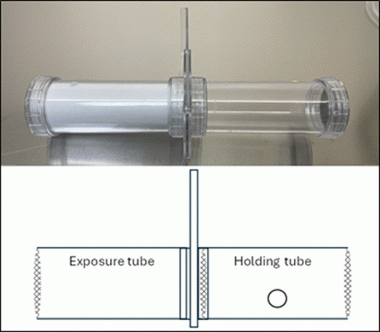
Monitoring susceptibility to volatile pyrethroids: the two-tube assay
A benchtop assay, adapted from the WHO tube test, for monitoring mosquito susceptibility to transfluthrin and other volatile pyrethroids, in development with partner laboratories. Read more
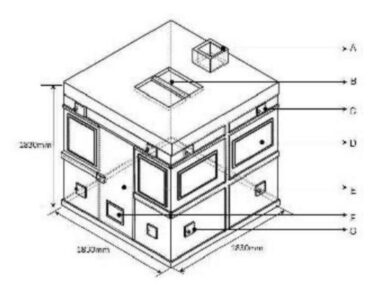
Peet-Grady chamber methods for volatile products
Optimising free-flight Peet-Grady chamber methods for evaluating volatile products, and developing a low-cost chamber specification that partner laboratories can build and validate in-country. Read more
Screening candidate volatile compounds
Screening a panel of candidate volatile compounds against susceptible and pyrethroid-resistant Anopheles gambiae in chamber and benchtop assays, from knockdown and mortality through to blood-feeding inhibition. Read more

LASER
Entomological support to the EU-funded LASER consortium evaluating spatial emanators for malaria control, including susceptibility testing, methods training and data analysis. Read more
Discriminating concentrations for broflanilide and isocycloseram
A WHO-coordinated multi-centre study establishing discriminating concentrations for two new indoor residual spraying active ingredients; the values were published by WHO in June 2026. Read more
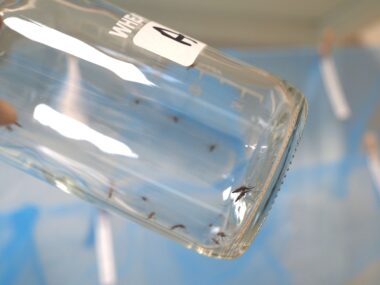
Phenotypic characterisation of Kisumu colonies
A multi-site study comparing insecticide susceptibility of the widely used ‘Kisumu’ susceptible Anopheles gambiae strain across sixteen testing facilities, with implications for how reference strains are maintained and monitored between laboratories.
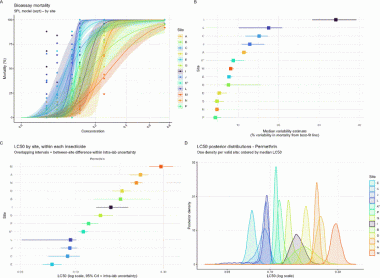
Innovation to Impact: Methods Validation (2021–2025)
The group began as the Methods Validation workstream of Innovation to Impact (I2I). Read about the completed project and its outputs.