Peet-Grady Chamber Methods
The Peet-Grady chamber is the standard free-flight chamber for evaluating volatile and aerosolised products against mosquitoes. We are optimising chamber methods for volatile chemistries – including environmental control, airflow and blood-feeding endpoints – to measure both toxicological and behavioural effects.
These methods have been applied in a collaborative study of transfluthrin resistance, available as a preprint on bioRxiv. Peet-Grady chamber assays — measuring flight activation, blood-feeding inhibition and toxicity, with video tracking of mosquito behaviour — showed that commonly circulating pyrethroid resistance mechanisms also reduce responses to transfluthrin in Anopheles and Aedes: resistant mosquitoes were less affected across behavioural and toxicological endpoints, with the reduction correlating with resistance strength.
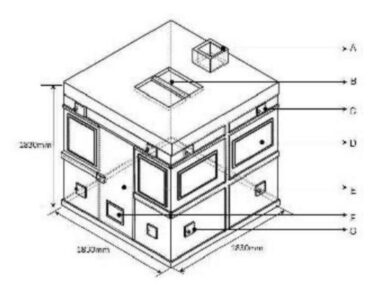
Because commercial chambers are expensive to ship and build, we are also developing a low-cost “minimum requirements” chamber specification that partner laboratories can construct and validate in-country, alongside best-practice guidance for building and running chambers.